
Overview
A kitchen printer in bepoz terminology is typically a dot matrix impact printer located in or near a kitchen, bar, or dispense area. It is used for printing food and drink order dockets (remote printing).
Unlike thermal receipt printers, kitchen printers use:
-
An ink ribbon cartridge (black or red/black), and
-
A rough-textured paper roll, often single, 2-ply, or 3-ply
Thermal receipt paper (smooth and heat-sensitive) will not work in a kitchen printer.
Below are some common supported kitchen printer models:
| Brand | Common Kitchen Printer Models |
|---|---|
| Gravity | BTP-M300, BTP-M280 |
| Bixolon (Samsung) | SRP-275II, SRP-270 |
| Epson | TM-U220, M166B |
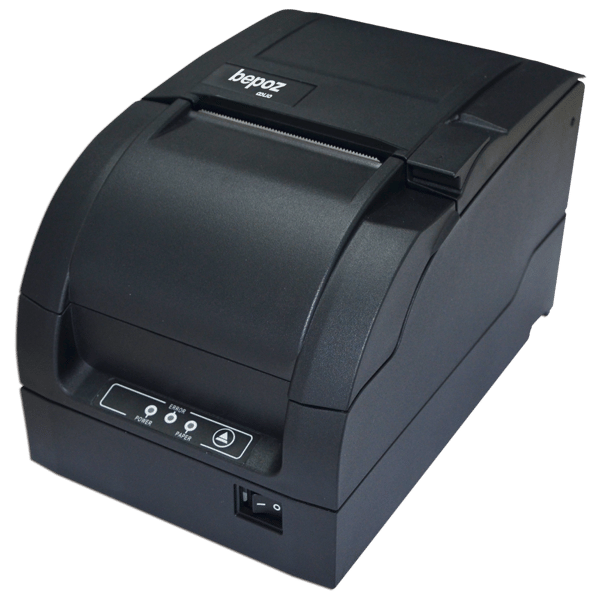
Image below is a Gravity BTP-M300
Kitchen printers in bepoz are supported using only two connection types:
-
Serial (Comm Port)
-
Ethernet (TCP/IP Network)
Refer to the diagram in Section 2.d below for the two supported installation methods.
How Printing Works in bepoz (Important)
Kitchen printers do not print directly from the POS interface.
In bepoz, print jobs are processed by SmartPrint, which runs on a specific workstation or POS till assigned to the printer device.
This means:
-
Every printer device is owned by one Workstation
-
That Workstation must be powered on
-
SmartPrint must be running
-
If the controlling workstation is offline, printing will fail even if the printer appears ready
Tip: Always confirm the controlling workstation or POS till before proceeding with hardware checks.
Troubleshooting Process
Follow the five (5) steps below in order (click for fast navigation):
Step 1 — Identify the Issue
Before adjusting settings:
Confirm all cables are securely connected
Restart the controlling workstation or POS till
Restart the SmartPrint software
If there have been no recent system changes, a restart will often resolve temporary communication faults.
**If the printer still does not respond, proceed to Step 2.
Step 2 — Physical Printer Checks
2.a Power and Status Lights
Confirm the printer has power:
Is the power light on?
Is the status light green?
If no power:
Test the power outlet
Check the printer power pack and cable
Confirm the kettle-style power lead is firmly connected into the power pack
Tip: The kettle lead can sometimes be accidentally pulled loose, especially if the power pack is hidden inside a cupboard or behind the POS workstation or POS till.
If under warranty, contact bepoz Support with clear photos.
To order a replacement power pack, email: supplies@bepozglobal.com
2.b Paper and Ribbon Checks
Kitchen printers require:
Rough-textured impact paper
An ink ribbon cartridge
Confirm:
Paper is loaded correctly
Ribbon is installed
Ribbon is not worn out
🚩 Important: Thermal receipt paper will not work.
To order replacement paper or ribbons, contact:
email - supplies@bepozglobal.com
online - https://www.posgear.com.au/
2.c Perform a Self-Test Print
A self-test confirms the printer hardware is functioning.
Note: The self-test procedure may vary slightly depending on the printer make and model. If the steps below do not work, refer to the manufacturer’s documentation or contact bepoz Support for assistance.
General process:
Turn the printer off (using the printer power switch)
Press and hold the Feed button
While holding Feed, switch the printer on
Release after 2–3 seconds when printing begins
Press Feed again if required to complete the test
If a test receipt prints, retain it. It contains important configuration details such as baud rate, handshaking, and (for network printers) IP address.
If the printer cannot perform a self-test, contact bepoz Support.
2.d Kitchen Printer Cabling Methods (refer to diagram)
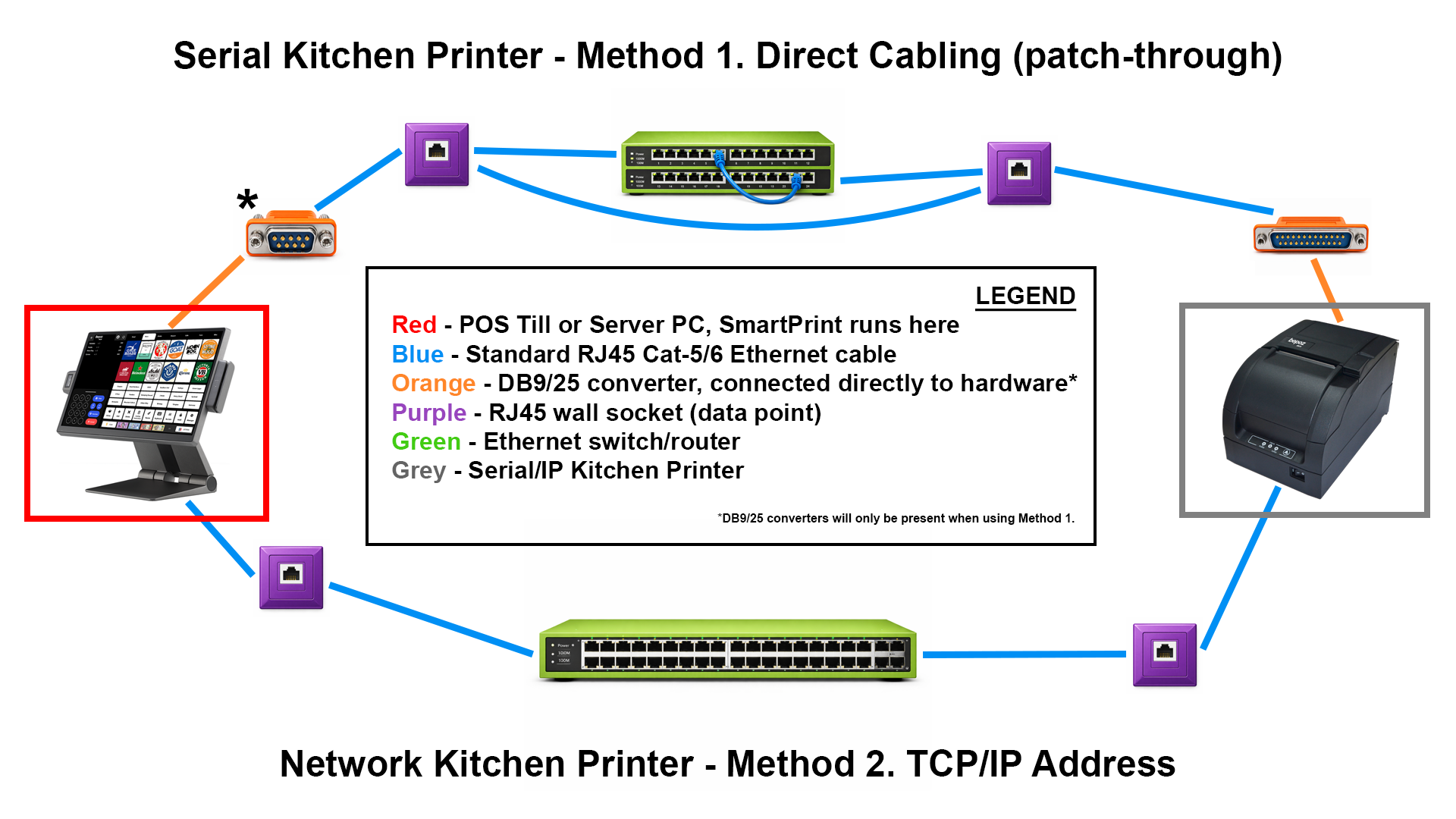
Refer to the diagram above.
Kitchen printers are installed using one of two methods:
Method 1 — Serial Kitchen Printer (Direct Cabling / patch-through)
(Top half of diagram)
Legend reference:
Red — Server / POS Till (SmartPrint runs here)
Blue — Standard RJ45 Cat-5e/Cat-6 Ethernet cable
Orange — DB9/DB25 converters (connected directly to hardware)
Purple — RJ45 wall socket (data point)
Green — Ethernet switch/router (used only as patch-through if present)
Grey — Serial kitchen printer
- *DB9/25 converters will only be present when using Method 1.
In this method:
The POS or Server outputs a serial signal.
A DB-9 converter connects directly to the hardware (in most situations).
The signal travels over Cat-5/6 structured cabling via wall sockets. This may be:
Patched between two ports on a switch or patch panel (as a simple pass-through), or
Hard-wired internally from wall socket to wall socket without passing through active network equipment.
At the printer end, a DB-25 (or DB9) converter connects into the kitchen printer.
🚩 Important, in Method 1:
The RJ45 cable carries serial communication, not Ethernet.
Even if the cable is patched through a switch or patch panel, it must not connect to active network ports unless the installation is specifically configured for TCP/IP.
Converters must be securely screwed into place.
Pin mapping between converters must match.
- DB-9/25 converters may not have ALL pins populated. This is normal. These converters are intentionally wired to match the required serial output of the POS till and manufacturer cable specifications. Also see Section 3.c below.
When diagnosing potential cabling issues, if cabling runs through walls or ceiling space, internal IT or an electrician may be required.
Method 2 — Ethernet (TCP/IP) Kitchen Printer
(Bottom half of diagram)
Legend reference:
Red — Server / POS till (SmartPrint runs here)
Blue — Standard RJ45 Cat-5e/Cat-6 Ethernet cable
Purple — RJ45 wall socket (data point)
Green — Ethernet switch/router
Grey — Serial kitchen printer (configured with IP)
In this method:
The printer is configured with an IP address.
It connects to the network via switch/router.
The Server or POS till communicates with it over TCP/IP.
This is a true network printer installation.
Do Not Mix Methods
Serial and TCP/IP configurations are not interchangeable.
If wiring matches the Serial method, BackOffice must use COM settings.
If wiring matches the TCP/IP method, BackOffice must use TCP-P settings.
- Do NOT connect an active network into a DB-9/25 converter.
Incorrect configuration will prevent printing.
**If printer physical checks pass and the printer still does not respond, continue to Step 3.
Step 3 — Physical Checks at the POS Till or Server
3.a Confirm the Controlling Workstation
In BackOffice, identify which workstation the printer is assigned to.
Confirm:
That workstation or POS till is powered on
SmartPrint is running
No errors are displayed
If the controlling device is offline, printing will not occur.
3.b RJ50 Comm Port Converter Warning
Some POS tills use a DB-9(M)-to-RJ50 converter cable.
Important:
Only connect to the correct Comm port
Do not connect to the LAN/Ethernet port
⚠️ Only use the cables and adapters supplied by the printer or hardware manufacturer
Warning: RJ-style connectors may look similar to standard network cables, but they are not wired the same way. Substituting generic Ethernet cables or third-party adapters can result in communication failure or incorrect pin mapping.
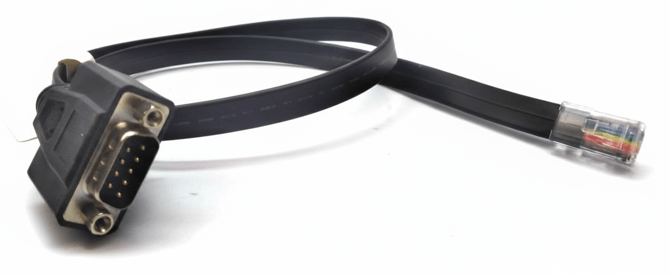
Image below is a DB-9(M)-to-RJ50 cable
If unsure, use the original cables provided in the manufacturer’s box or contact bepoz Support before replacing any cabling.
3.c DB-25 to RJ45 Serial Adapters (Structured Cabling Installations)
In some installations, a D-sub (DB-9 female)-to-RJ45 adapter is used at the POS workstation or POS till end, and a D-sub (DB-25 male)-to-RJ45 adapter is used at the printer end.
Image below is DB-25(M)-to-RJ45 adapter
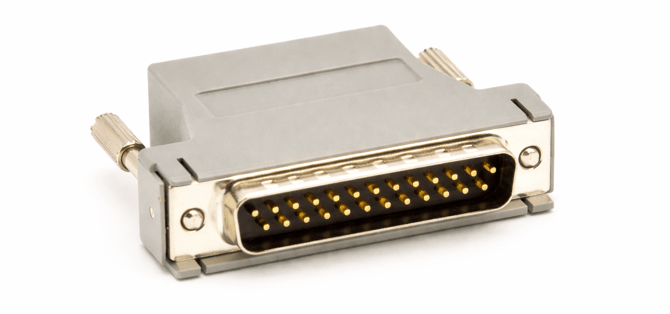
The DB-9(F) adapter generally connects into the RJ50-to-DB-9(M) converter or serial port, the DB-25(M) will connect directly into the rear of the serial kitchen printer, and a Cat-5e or Cat-6 cable is then used to carry the serial signal through the venue’s structured cabling.
The cabling may:
Run directly to another D-sub-to-RJ45 adapter at the printer, or
Pass through a data rack or patch panel and then route to another data point elsewhere in the venue before reaching the printer.
🚩 Important Considerations
These installations rely on correct pin mapping between adapters.
Standard Ethernet networking rules do not apply — this is still serial communication.
The cable must not be connected to an active network switch or LAN port.
Patch panel routing must be confirmed end-to-end.
If a structured cabling setup is used and the printer is not responding:
Confirm both D-sub-to-RJ45 adapters are secure.
Confirm the Cat-5e/Cat-6 cable is intact and correctly patched.
Trace the cable path where possible.
Test with a direct serial cable if available to eliminate building cabling as the fault source.
If unsure, contact your organisation’s internal IT team or bepoz Support before modifying any structured cabling.
3.d USB-to-Serial Adapter (If Used)
If the workstation or POS till has no available Comm ports, a USB-to-Serial converter may be installed.
These adapters are common failure points.
Check:
Windows Device Manager
Confirm the adapter is installed correctly
Identify the assigned Comm Port number (e.g., COM3)
Confirm the correct Windows operating system driver is installed
Image below is an ATEN USB-A to Serial (RS-232) adapter
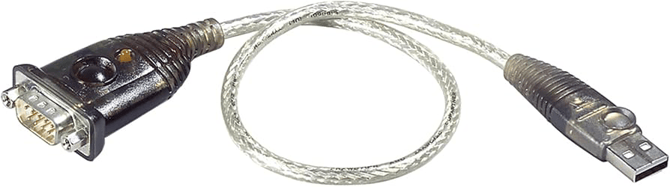
If the device does not appear in Device Manager, or shows a warning symbol, the required driver may need to be installed or reinstalled. Refer to the adapter manufacturer’s website or contact bepoz Support for assistance.
3.e Serial Isolation Test (Method 1 Only)
If using the Serial method:
Bring the printer next to the POS/Server.
Connect the POS-side converter directly to the printer-side converter using a short known-working cable.
Restart SmartPrint and test.
If printing works directly but fails via wall sockets, the fault lies in structured cabling or patching.
**If all physical checks pass and the printer still does not respond, continue to Step 4.
Step 4 — BackOffice Device Settings
4.a Confirm Printer Configuration
In BackOffice:
Navigate to System Setup → Venues → Stores → Tills
Locate and edit the correct Kitchen Printer device.
Confirm:
Printer Sub-Type matches the physical model
Workstation assignment is correct
Changing the Workstation will also change where the printer appears in the Venue tree.
Refer to [click link →] General Thermal Serial Receipt Printer Troubleshooting (Section 3) for assistance when confirming the settings for below:
i. Serial Kitchen Printer (Method 1)
Use when wiring matches the Serial diagram.
Confirm:
Port Name (COMx)
Baud Rate (match self-test docket)
Bits
Stop Bits
Parity
For bepoz serial printing:
RTS ON must be enabled
Use CTS must be enabled
Incorrect values will prevent printing even if the printer appears ready.
ii. Ethernet Kitchen Printer (Method 2)
Use when wiring matches the TCP/IP diagram.
Confirm:
Port Name = TCP-P
TCP Port = typically 9100
IP Address = matches printer configuration
The IP address is usually printed on the self-test docket.
4.b Apply Changes and Restart Services
After updating the Device Profile:
Click OK
Restart Smart Controller
Restart SmartPrint
Perform a test print
Failure to restart may prevent changes taking effect.
Step 5 — Communication Testing
Serial Printer Testing (CommTest)
For serial printers:
Log into the controlling workstation
Shut down SmartPrint
Open CommTest (generally found in C:\BEpoz\Programs\commtest.exe)
Select correct COM port and baud rate
Test
If nothing prints, a cable, converter, or port fault is likely.
Ethernet Printer Testing
If using TCP/IP:
Confirm the printer responds on the network
Confirm IP address matches BackOffice
Confirm SmartPrint is running on the assigned workstation
⚠️ Do not modify firewall or network security settings unless directed by your organisation’s internal IT team or bepoz Support.
Final Escalation
If the kitchen printer still does not print after completing all steps:
Contact bepoz Support to arrange further investigation, onsite service, Return Merchandise Authorisation (RMA), or deeper diagnostics if required.
updated to: bepoz v4.8.2.1